
The Meet-Not-So-Cute: When PR Met Propaganda (And Sold Cigarettes as Liberation)
On Easter Sunday 1929, modern public relations as we know it was arguably born — not in a boardroom, but on Fifth Avenue. Its architect: Edward Bernays, a nephew of Freud himself, and still referred to as the "father of public relations."
Bernays knew how to create a triangulation: connect the audience, the product, and a deeply held cultural value. That was his formula, and it worked.
He'd grown obsessed with propaganda after working to mobilize the U.S. to enter WWI, and came away with a conviction: "if it could be used for war, it could also be used for peace."
Messaging Tools Are Neutral… But The People Using Them Aren't.
Like so many other powerful discoveries, this one didn't stop bad actors from continuing to use it destructively (social media, anyone?). In fact, Goebbels — Hitler's propaganda minister — stated that he based much of his campaign on what he'd learned from Bernays' book, Crystallizing Public Opinion.
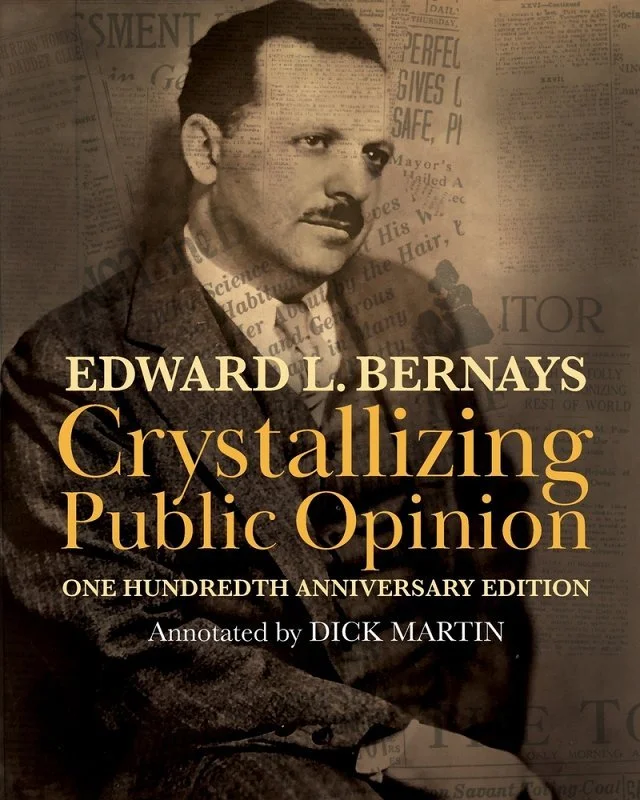
Oy.
What Separates Propaganda from Social Impact?
The eternal tension between message and manipulation wasn’t invented by Bernays. It’s always been there.
After working in the social impact space for several years, I went to grad school specifically to understand how propaganda works, and where propaganda ends and social impact begins.
I can't remember the source, but a distinction that has stayed with me:
propaganda intends to divide and dehumanize; social impact intends to unite people and stoke recognition of humanity in another.
What I've found in practice is that a lot of social impact work is spent reverse-engineering propaganda: trying to understand its mechanics in order to, as Bernays put it, apply them to peace.
Change Is Harder to Sell Than the Status Quo
Roland Barthes, in Mythologies, argues that it's easier to land messages that preserve the status quo because people are fundamentally afraid of change. This creates a compounding problem for anyone working toward social good.
Those in pursuit of social impact face two hurdles: first, their goal — moving people toward change — is objectively harder to achieve.
Second, sharks don't have to study how to shark. They just “are” shark. A dolphin, for example, who’s impressive in its own right but a tad friendlier, would first need to learn how sharks move, how they strike, and then commit that knowledge to muscle memory. It doesn't come naturally.
While it might be useful to understand how sharks hunt, it’s not how a dolphin is going to win. I’ll just leave that aquatic metaphor, in all its cryptic glory, for there right now.
Back to Bernays.
The Genesis of the "Torches of Freedom" Campaign
In the 1920s, American social norms made it taboo for women to smoke in public.
Recognizing the untapped market potential, George Washington Hill (president of the American Tobacco Company) enlisted Bernays to challenge that taboo and grow the Lucky Strike consumer base.
Bernays consulted psychoanalyst A.A. Brill, who proposed that cigarettes could function as a symbol of liberation and equality for women.
Armed with that frame, Bernays devised a strategy to connect smoking with the women's rights movement.
Executing the Strategy: Cigarettes as "Torches of Freedom"
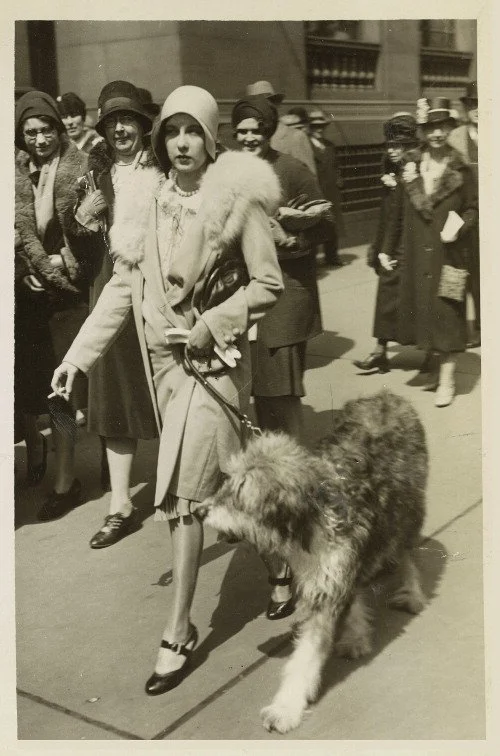
Edith Lee at the 1929 Easter Parade. Source: Library of Congress
During the 1929 Easter Sunday Parade in New York City, Bernays staged what would become one of the most analyzed publicity stunts in PR history.
He recruited young women to march in the parade and, at a coordinated moment, light cigarettes — branded "Torches of Freedom" — as a public act of emancipation.
He'd tipped off the press in advance, ensuring the moment was widely photographed and covered.
It worked. Images of women smoking as a symbol of liberation ran in newspapers nationwide, effectively fusing cigarette consumption with the growing women's rights movement.
Bernays, being Bernays, later reportedly inflated the impact of the stunt a bit. It’s important to note that some observers on the ground in realtime apparently had highly-attuned BS detectors and saw through it.
The Ethical Implications of Hijacking a Social Movement
The "Torches of Freedom" campaign is a near-perfect case study in how PR can co-opt legitimate social values to serve commercial interests.
By tethering cigarette smoking to women's equality, the campaign manipulated a genuine movement to open a new market segment for the tobacco industry.
It was strategically masterful, but more complicated when you examine it through an ethical lens.
At the time, the health risks of smoking weren't yet widely understood — the Surgeon General's report wouldn't come until 1965. (I know this because my badass grandmother quit smoking the day that report was released, cold turkey.)
Bernays and his contemporaries didn’t know the exact health ramifications of smoking yet. That said, they still couldn't claim ignorance about was the manipulation itself: they knew they were using the language of liberation to sell cigarettes.
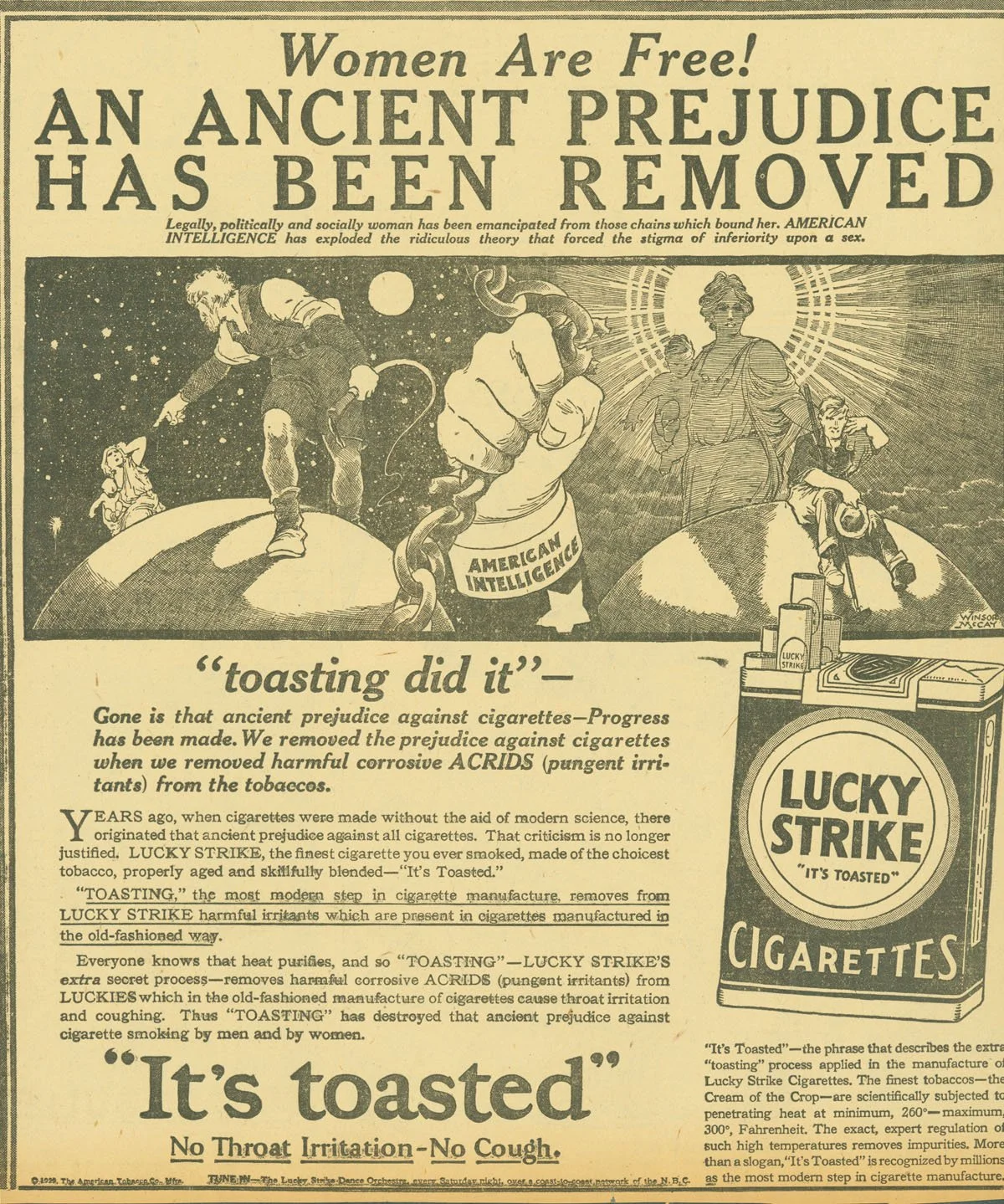
Source: Tobacco Papers
Lessons for Messaging Professionals
The "Torches of Freedom" campaign is still taught in communications programs because it illustrates that the same tools that can advance a genuine cause can just as easily exploit one.
Some takeaways:
Align campaigns with something real. The messages you put out should reflect values the audience actually holds — not values you're performing on their behalf to drive a commercial outcome. This is admittedly a tightrope. You can't always control what you'll be accused of. But you can get right with yourself first. It's a lot easier to sleep at night when you haven't sold your core values down the river for a buck.
Think about downstream consequences. Assess the potential impact of what you're being asked to build — not just whether the brief makes sense, but what it does in the world. When something feels wrong in your gut, that's usually data. In the short term, sure, you need a paycheck. But anyone willing to be this shady won't hesitate to throw you under the bus later. Protect yourself and your integrity. You'll thank yourself.
Ask whether it would hold up to scrutiny. Before you take on a project, think about who might eventually look at it — a journalist, a regulator, a future employer, your family. "Would I be proud to explain this?" is an underrated filter.
The Moral Stakes of Messaging Work
The reason this 1929 campaign still gets talked about is because it highlights what persuasion can do when it's uncoupled from honest intent.
Messaging is powerful. That's precisely why it demands judgment: not just strategic judgment, but moral judgment.
The question isn't only does this work?
It's what impact will it have?
This piece is adapted from 96 Years Ago Today, a PR Campaign Made Cigarettes Symbolize Women’s Liberation. Here's Why It Still Matters., originally published on LED Musings on March 31, 2025.
If this resonated, you can get new posts straight to your inbox — subscribe to LED Musings on Substack (it's free!).